Begin with the model’s question
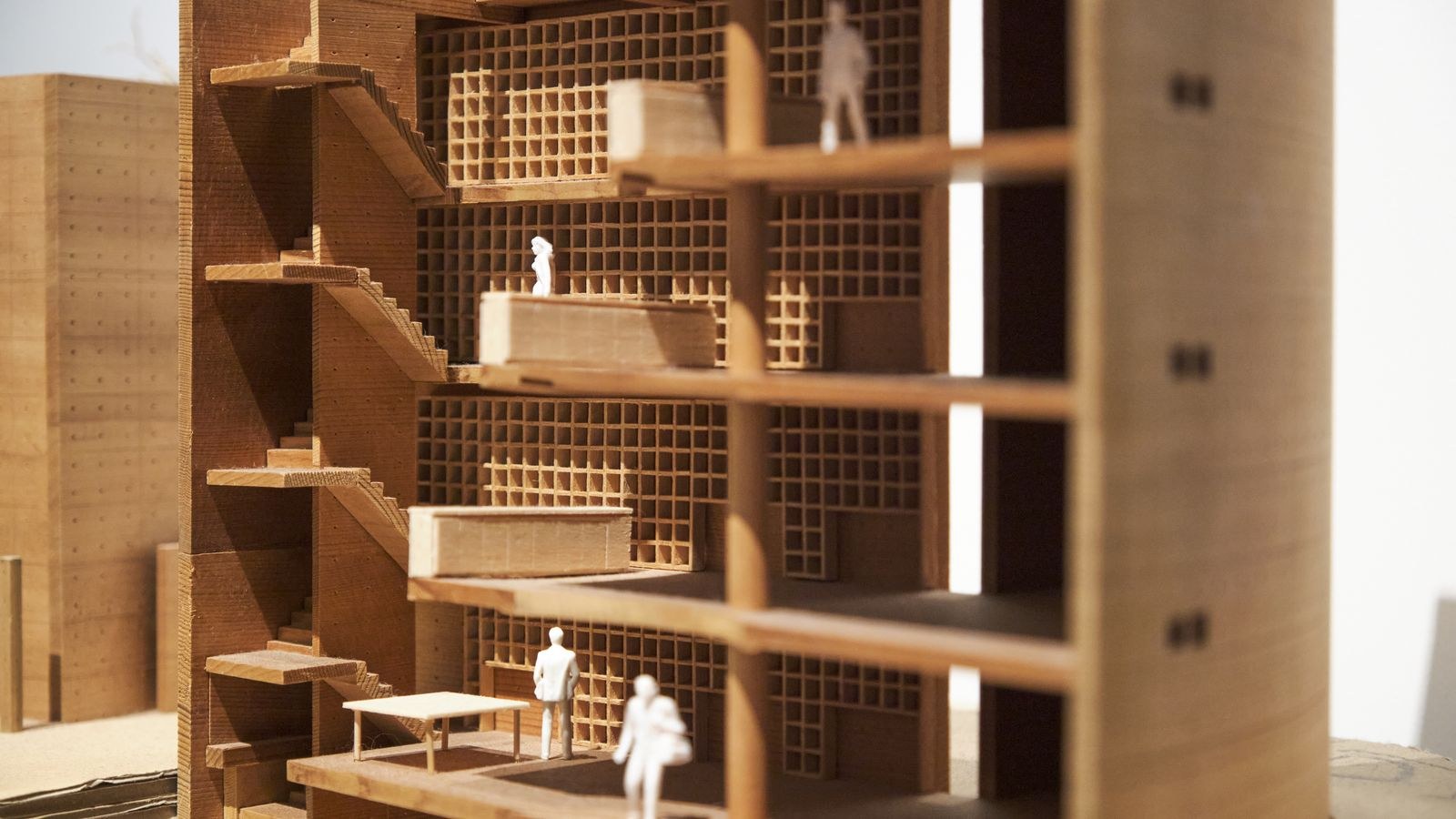
An architectural model can test massing, circulation, spatial relationships or presentation. The same object cannot show every concern equally well. Ask what decision the model was built to support before judging its finish. A rough study model may reveal a relationship more clearly than an elaborate display piece. Describe its purpose explicitly so that visual attractiveness does not become the only criterion of success.
Explain the chosen scale
Scale determines which relationships are visible and which details become impractical to represent. Record the scale and explain why it suits the question. Do not infer actual dimensions from an unlabelled photograph of a model. When comparing options, keep scale consistent or make the difference explicit. A proposal can appear more spacious simply because the surrounding context has been reduced, simplified or left outside the model.
Trace movement through space
Choose one hypothetical user journey and trace it through the represented spaces. Identify entrances, transitions and points where the model cannot answer a question. Keep the scenario clearly labelled as an exercise, not evidence of actual user behaviour. If access or technical compliance is relevant, consult the appropriate specialist requirements rather than treating a miniature figure or an apparently generous opening as proof.
Name deliberate omissions
A model may omit material thickness, building services or neighbouring structures to focus attention. Those omissions are not necessarily mistakes, but they can limit the conclusions you draw. List what is represented symbolically and what is represented proportionally. If a presentation relies on light or colour to imply performance, distinguish that visual suggestion from an analysis actually carried out using a suitable method.
Present a decision and a limit
Conclude a model critique with the decision it helps make and one question requiring another representation or investigation. Pair photographs with a short explanation of viewpoint and scale. The strongest discussion connects a visible feature to a design consequence without claiming that the model proves the whole building will work. This way of reading develops architectural judgment rather than rewarding surface polish alone.